
Blog Summary
What Is a Centralized Emergency Lighting System?
A centralized emergency lighting system is a backup lighting solution that provides emergency illumination from a single central power source rather than individual batteries inside each fixture.
In a centralized system, an emergency lighting inverter and battery system supplies power to designated lighting circuits when normal utility power fails. The inverter converts stored battery power into the correct voltage and waveform so that standard lighting fixtures can operate during an emergency.
These central emergency lighting systems are commonly installed in:
- Hospitals
- Data centers
- Airports
- Universities and campuses
- Office towers
- Large commercial facilities
- Industrial complexes
By supplying backup power from one location, centralized systems can support large groups of emergency fixtures across an entire building or facility. The inverters are installed in a central electrical or equipment room and feed selected normal luminaires on designated circuits, effectively creating a centralized emergency lighting system rather than many distributed unit packs.
How Centralized Emergency Lighting Systems Work
Central emergency lighting systems automatically activate when power is interrupted.
- Normal Operation
During normal conditions, lighting fixtures operate using standard utility power. The central inverter continuously monitors the incoming electrical supply.
- Power Loss Detection
If utility power fails, the system detects the interruption instantly.
- Automatic Transfer to Emergency Power
The inverter switches to battery power and begins supplying emergency electricity to designated lighting circuits.
- Emergency Illumination
Connected lighting fixtures continue operating so that occupants can safely exit the building.
Most building codes require emergency lighting systems to provide at least 90 minutes of illumination during a power outage to allow safe evacuation.
Centralized Emergency Lighting vs Unit Battery Systems
Emergency lighting can be provided using two primary approaches: centralized systems or unit battery fixtures.
Centralized Emergency Lighting Advantages
In a centralized system, a single inverter and battery system powers multiple fixtures.
Advantages include:
- Easier maintenance
- Centralized testing
- Longer equipment lifespan
- Cleaner architectural design
- Higher reliability in large buildings
Unit Battery Emergency Lighting Advantages
Unit battery systems place a small battery pack inside each emergency fixture.
Advantages include:
- Lower upfront cost
- Simpler installation for small buildings
- Independent fixture operation
However, these systems require individual battery replacement and testing, which can become time-consuming in larger facilities.
When to Use a Centralized Emergency Lighting System
Centralized systems are particularly beneficial in buildings where reliability and maintenance efficiency are priorities.
- Large Commercial Buildings
Office towers and commercial complexes often contain hundreds of emergency fixtures. A centralized system simplifies maintenance and testing.
- Healthcare Facilities
Hospitals and medical centers require highly reliable emergency lighting systems to support patient safety and regulatory compliance.
- Data Centers
Mission-critical facilities like data centers require uninterrupted lighting during outages to ensure safe operation and emergency response.
- Campuses and Large Facilities
Universities, airports, and government buildings often span multiple floors or structures. Centralized systems allow coordinated emergency lighting coverage across the entire property.
Benefits of Centralized Emergency Lighting Systems
Central emergency lighting systems provide several important advantages for facility owners and designers.
- Simplified Maintenance
Because batteries are located in a single system, maintenance staff do not need to service individual fixtures throughout the building.
- Reduced Long-Term Costs
While centralized systems may require higher initial investment, they often reduce maintenance and replacement costs over time.
- Better System Monitoring
Many centralized systems include monitoring features that help facility managers track system performance and test results.
- Cleaner Architectural Design
Using a central inverter allows designers to use standard architectural lighting fixtures rather than emergency fixtures with visible battery packs. - Improved Reliability
Centralized battery systems are designed for long-term performance and can support large numbers of fixtures simultaneously.
Why Central Emergency Lighting Systems Are Growing in Popularity
Improved Lumen Output & Fixture Quality
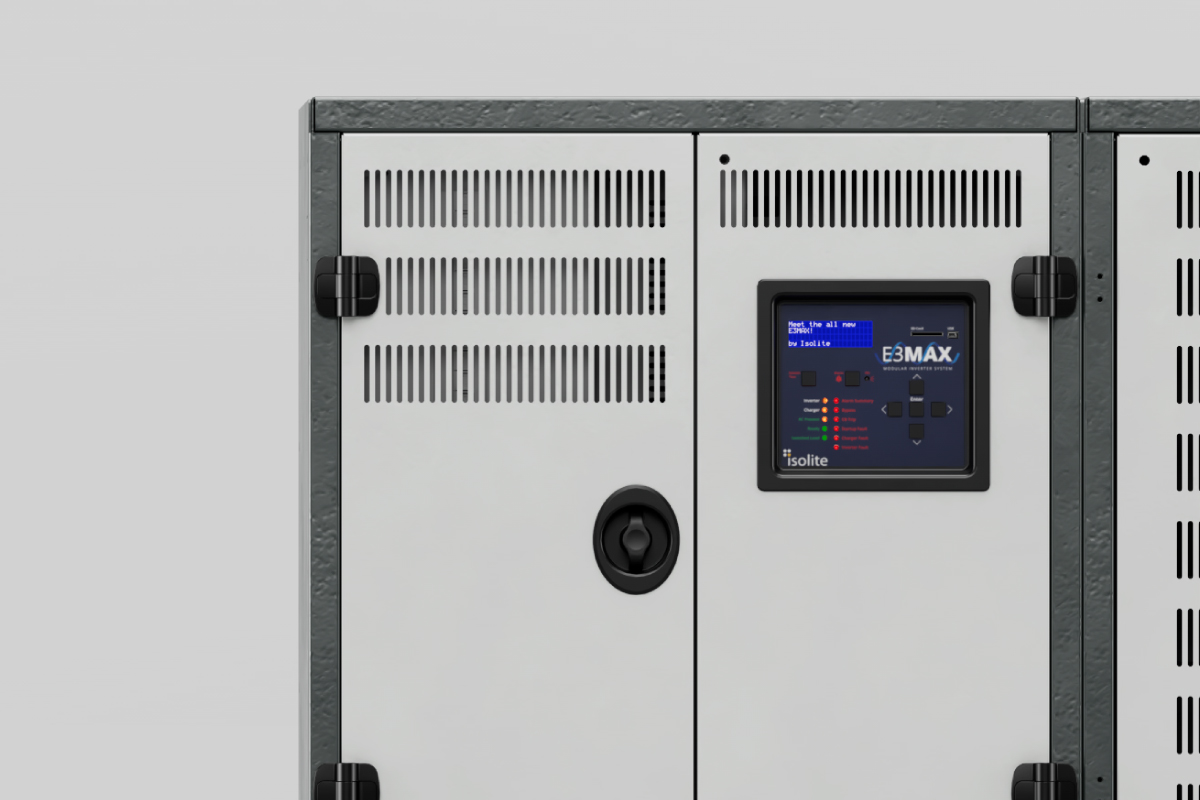
One technically important advantage of central power systems is that the central inverter delivers full AC voltage (a pure sine wave). This full-voltage capability enables the connected luminaires to operate at full-rated lumen output during an emergency. Unit equipment batteries typically power fixtures at reduced lumen levels, which may require more fixtures to meet the minimum 1 fc illuminance required by code. Isolite’s E3 inverter series specifically outputs a pure sine wave with a high crest factor of 4, enabling compatibility with LED, HID, fluorescent, and incandescent loads — including inrush-heavy cold starts.
Architectural Aesthetics & Fixture Flexibility
Central inverters allow the use of standard architectural fixtures as emergency fixtures, since they don’t require integral battery heads or “bug-eye” unit equipment. This option is a major advantage in healthcare, hospitality, and institutional spaces where unit equipment fixtures can disrupt design intent. Unit equipment adds visible hardware (battery heads, remote fixtures) throughout the space, which architects frequently push back on.
As buildings become larger and more technologically complex, centralized emergency lighting systems are increasingly preferred.
Modern facilities demand:
- Improved reliability
- Simplified maintenance
- Centralized monitoring
- Compliance documentation
- Integration with building systems
Bottom Line for Large Commercial
For large commercial buildings (office towers, hospitals, schools, retail), industry consensus points clearly toward central inverters as the smarter long-term play once fixture counts reach the dozens. The labor savings on testing alone, combined with full-output illumination, architectural flexibility, and a 10+ year battery lifespan, typically outweigh the higher upfront cost. Unit equipment remains a practical fallback for smaller zones, scattered retrofits, or areas where running new circuit wiring to the inverter isn’t feasible.
Architectural vs. Commercial vs. Contractor-Grade Emergency Lighting & Exit Signs FAQ
A central emergency lighting inverter is a device that converts stored battery power into usable AC power for lighting fixtures during a power outage. It allows standard lighting fixtures to operate as emergency lighting without needing individual battery packs.
Most building codes require emergency lighting systems to provide illumination for at least 90 minutes after normal power is lost. This ensures occupants have enough time to evacuate the building safely.
Centralized systems use a single inverter and battery system to power multiple fixtures, while unit battery lighting places a small battery pack inside each emergency fixture. Centralized systems are typically preferred for larger buildings due to easier maintenance and monitoring.
Centralized emergency lighting systems are commonly used in large facilities such as hospitals, airports, universities, office buildings, industrial plants, and data centers, where reliability and centralized maintenance are important.
Yes. Emergency lighting systems must be tested regularly in accordance with building codes. Many modern centralized systems include automated testing and monitoring features that simplify compliance reporting.